SBA Loan Interest Rates in 2026: Every Program Compared
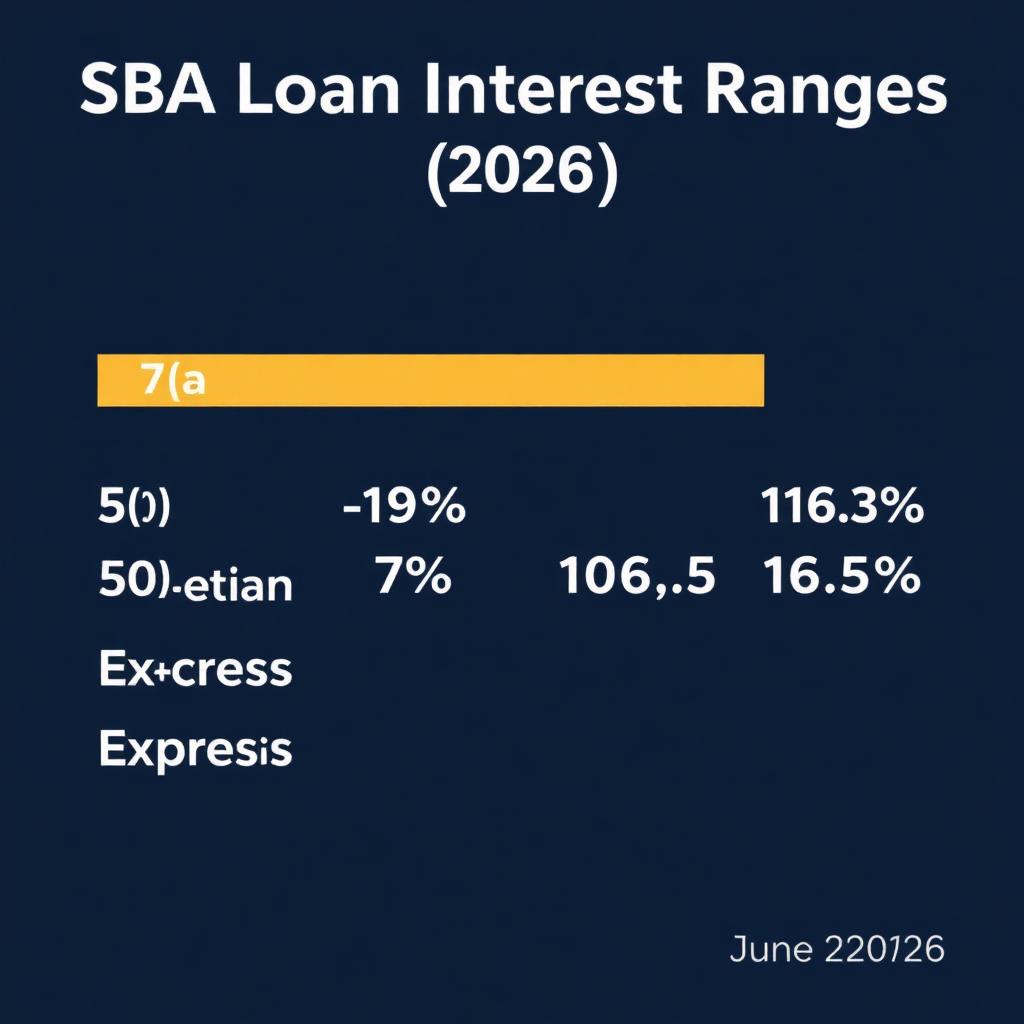
Current SBA loan interest rates (June 2026 per NerdWallet): SBA 7(a) loans 9.75%–14.75% APR. SBA 504 loans 5%–7% APR. SBA microloans 8%–13% APR. SBA Express 10.5%–16.5% APR. Rates vary by loan size, term, and lender. SBA caps the maximum rate above Prime; actual rate is negotiated with the SBA-preferred lender.

Current SBA loan interest rates (June 2026 per NerdWallet): SBA 7(a) loans 9.75%–14.75% APR. SBA 504 loans 5%–7% APR. SBA microloans 8%–13% APR. SBA Express 10.5%–16.5% APR. Rates vary by loan size, term, and lender. SBA caps the maximum rate above Prime; actual rate is negotiated with the SBA-preferred lender.
Key takeaways
- SBA 7(a) loans: 9.75%–14.75% APR (NerdWallet, June 2026).
- SBA 504 loans: 5%–7% APR — designed for real estate and large equipment.
- SBA microloans: 8%–13% APR — caps at $50K.
- SBA Express loans: 10.5%–16.5% APR — faster approval, smaller amounts.
- Maximum SBA 7(a) rate = Prime + 6.5% on loans ≤$50K; Prime + 3% on $250K+ over 7 years.
- Actual rate is negotiated with the SBA-preferred lender within the SBA cap.
- Variable-rate loans typically reprice quarterly with Prime; fixed-rate options exist for some 7(a) loans.
Who this is for
Small business owners researching sba loan interest rates who want a clear, advisor-quality overview before making a financing decision.
Operators comparing a current offer against alternative sba loan interest rates options to confirm they are getting market-competitive terms.
First-time borrowers who want to understand the full sba loan interest rates landscape before applying.
What you need to qualify
Typical requirements across the BizBee Funding partner network. Specific minimums vary by lender and product.
| Requirement | Typical standard |
|---|---|
| Personal FICO | 650+ typical, 680+ unlocks best pricing |
| Time in business | 24+ months typical (some lenders accept 12+ with strong file) |
| Annual revenue | $250K+ typical for 7(a) |
| Owner equity | 10%+ for 504; 10–20% on most 7(a) |
| Use of funds | Documented business purpose |
| Personal guarantee | Required from all 20%+ owners |
Best funding options
Product categories available through BizBee's lender network for this topic.
How SBA Loan Interest Rates Actually Work in 2026
SBA loan interest rates are not set by the SBA directly. Instead, the SBA caps the maximum rate a lender can charge above the Wall Street Journal Prime Rate, and the actual rate is negotiated between the borrower and the SBA-preferred lender within that cap.
For SBA 7(a) loans — the most common program — the maximum interest rate structure is: Prime + 6.5% on loans up to $50,000, Prime + 6% on loans of $50,001–$250,000, Prime + 4.5% on loans of $250,001–$350,000 over 7 years, and Prime + 3% on loans of $250,001+ over more than 7 years. With Prime at roughly 7.75% in mid-2026, this produces the 9.75%–14.75% range reported by NerdWallet (June 2026 update).
SBA 504 loans are structured differently. They combine a bank loan (50% of project), a Certified Development Company (CDC) loan (40%, backed by SBA debentures), and borrower equity (10%). The CDC portion currently prices at 5%–7% APR depending on debenture sale and term length. 504 loans fund real estate and large equipment up to $5.5M per project.
SBA microloans (up to $50K, 84-month term) are issued by SBA-approved nonprofit intermediary lenders, not banks. Rates currently run 8%–13% APR depending on the intermediary's pricing. Microloans have lower credit-score thresholds and are often the most accessible SBA product for newer businesses or borrowers with lower FICO.
SBA Express loans (up to $500K, 36-hour SBA review) carry slightly higher rate caps than standard 7(a): Prime + 6.5% on loans ≤$50K, Prime + 4.5% on loans above $50K. Current effective range: 10.5%–16.5% APR. Trade-off: faster SBA processing but smaller loan amounts and shorter terms.
Variable vs. fixed: most SBA 7(a) loans are variable-rate, repricing quarterly with Prime. Fixed-rate 7(a) loans exist but are less common and typically price slightly higher to compensate the lender for interest-rate risk. Ask your lender for both options when applicable.
The biggest opportunity to lower your SBA rate isn't shopping the SBA cap — it's improving your file. A 720 FICO, 4-year time-in-business, $1.5M revenue borrower will typically be offered the bottom of the cap range. A 650 FICO, 24-month time-in-business, $400K revenue borrower will typically be offered closer to the top of the cap range. File quality drives placement within the cap.
What this typically costs
Representative 2026 cost scenarios. Your actual offer depends on credit, revenue, time in business, and lender.
| $100K SBA 7(a) / 120 mo / 11.5% APR | $1,410/mo · $169,200 total payback |
| $500K SBA 7(a) / 120 mo / 10.25% APR | $6,675/mo · $801,000 total payback |
| $1M SBA 504 / 25-yr CDC at 6% APR | $6,443/mo on CDC portion · ~$2.5M total combined |
| $40K SBA microloan / 84 mo / 10.5% APR | $673/mo · $56,500 total payback |
| $250K SBA Express / 84 mo / 13.5% APR | $4,675/mo · $392,700 total payback |
How to decide if this is right for you
Use this 5-step framework to narrow your shortlist before comparing specific offers.
-
1
Confirm program fit before applying
7(a) for most uses. 504 for real estate + large equipment. Microloan for ≤$50K and lower FICO. Express for speed + smaller amounts.
-
2
Pull current Prime rate
SBA rate cap = Prime + spread. Knowing current Prime lets you calculate your maximum rate quickly.
-
3
Strengthen your file before applying
FICO, time in business, revenue trend, debt schedule cleanup. Placement within the cap depends on file quality.
-
4
Work with an SBA-preferred lender
Preferred Lender Program (PLP) lenders can approve without SBA review delays — substantially faster closing.
-
5
Compare fixed vs. variable
In a rising-rate environment, fixed is worth a slight premium. In a stable/falling environment, variable wins.
When this makes sense
- You want the lowest available rate and can wait 21–60 days to fund.
- Your file qualifies (FICO 650+, 24+ months in business, $250K+ annual revenue typical).
- Your use of funds matches an SBA-eligible purpose (working capital, equipment, real estate, acquisition, debt refinance).
- You can absorb the document load (tax returns, business plan, debt schedule, projections).
- Long-term financing (10+ years) materially improves your cash-flow position.
When to be careful
- When you need funding in <3 weeks (SBA timelines don't compress).
- When your file is below typical SBA thresholds (apply via online lender instead).
- When the lender you're working with isn't SBA-preferred (longer approval, less expertise).
- When variable-rate repricing risk would strain your cash flow in a rising-rate environment.
- When you haven't compared SBA 7(a) vs. SBA 504 for projects involving real estate.
How this plays out in practice
When the SBA wait pays off
Situation: Restaurant group needed $300K for a 4th location build-out. Owner FICO 720, 6 years in business, $2.4M revenue.
Recommendation: SBA 7(a) at 11.25% over 10 years. Monthly payment $4,150. Alternative 24-month online term loan at 22% APR would have cost ~$110K more over the comparable period. The 4-week wait saved six figures.
SBA 504 vs. 7(a) for real estate
Situation: Manufacturer needed $1.4M to buy its building plus $300K of equipment.
Recommendation: SBA 504 structure: $700K bank loan, $560K CDC loan at 6.25%, $140K equity. CDC portion fixed for 25 years. Total monthly debt service ~$9,400 vs. ~$15,800 on 7(a). 504 saved ~$76K/year in cash flow.
Microloan as graduation product
Situation: Catering company with 615 FICO, 14 months in business, $24K/mo revenue. Already had a 1.32 factor MCA outstanding.
Recommendation: $40K SBA microloan at 10.5% over 84 months consolidated the MCA and provided $15K of working capital. Monthly debt service dropped from $3,800 to $668. The microloan was the bridge from low-credit-tier to prime-tier financing.
Compare SBA options across preferred lenders
Get matched with SBA-preferred lenders that fit your file size, industry, and use of funds. Soft credit pull. Plain-English rate comparisons.
Frequently asked
Common questions
Key facts in one line
- SBA 7(a) loan rates currently range 9.75%–14.75% APR (NerdWallet, June 2026).
- SBA 504 loans price 5%–7% APR on the CDC portion — the lowest available SBA rate.
- SBA microloans cap at $50K with rates 8%–13% APR over 84 months.
- SBA Express loans price 10.5%–16.5% APR with 36-hour SBA processing.
- SBA rate is Prime + capped spread; actual rate negotiated with the SBA-preferred lender within the cap.
Glossary
Terms worth knowing
- Prime Rate
- The Wall Street Journal Prime Rate — the benchmark variable rate to which SBA rate caps are tied.
- CDC
- Certified Development Company — an SBA-approved nonprofit that issues the 40% portion of SBA 504 loans backed by debentures.
- Preferred Lender Program (PLP)
- An SBA designation allowing certain lenders to approve SBA loans without SBA review — substantially faster closing.
- Debenture
- The bond instrument used by CDCs to fund the SBA portion of 504 loans. Rates set at debenture sale, typically monthly.
Ready to Join the Hive?
Apply now via BeeLine™ and get your funding decision in minutes. Complete in less than 60 seconds.